EO
Ethylene oxide
ISO 11135 validation: bioburden, half-cycle overkill or parametrically released approach, three full cycles, load configuration, EO/ECH residuals to ISO 10993-7.
Discuss EO validationSterile devices · ISO 11135 / 11137 / 11607
Bioburden, half-cycle, SAL and residuals work for EO, radiation and moist heat — plus sterile barrier validation, accelerated ageing and transport simulation for the packaging the product actually ships in.
A sterile device submission needs three linked evidence sets: process validation proving the sterilization cycle reaches a sterility assurance level of 10^-6, residuals testing proving nothing harmful remains, and packaging validation proving the sterile barrier keeps its integrity through handling, transport and ageing. Where one of the three is missing, the other two are questioned.
Process validation
ISO 11135 validation: bioburden, half-cycle overkill or parametrically released approach, three full cycles, load configuration, EO/ECH residuals to ISO 10993-7.
Discuss EO validationISO 11137-1/-2 dose establishment (VDmax25 or Method 1), dose mapping, material compatibility review and periodic dose audits.
Discuss radiation validationISO 17665 moist heat validation for reusable and heat-tolerant devices; vapour phase processes validated under ISO 14937 principles.
Discuss heat validationCleaning efficacy, disinfection and sterilization for reusable devices, including soil and protein residue testing and IFU validation.
Discuss reprocessingPackaging · ISO 11607
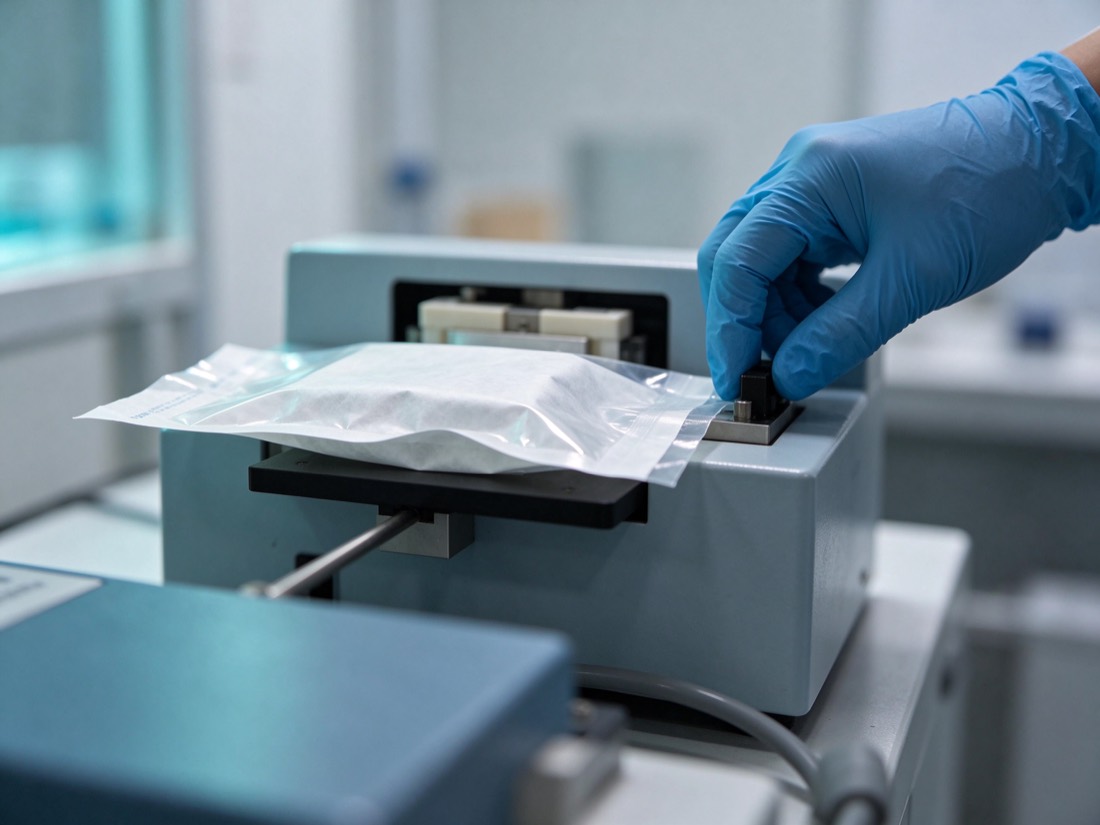
Seal parameters, material combination and ageing behaviour are all part of the validated system. A pouch that passes dye penetration on day one can still fail after 12 months of real-time ageing — and the regulator only needs one failure to ask for the whole study again.
Deliverables
| Document | Purpose | Typical reviewer question it answers |
|---|---|---|
| Validation plan | Product family, worst-case device, load pattern, acceptance criteria | Is the tested item representative of everything you sell? |
| Bioburden report | Baseline counts and identification of recovered organisms | Is the kill margin justified against real contamination? |
| Half-cycle / dose-setting report | Demonstrated overkill or dose establishment | Does the routine cycle deliver SAL 10^-6? |
| Residuals report | EO, ECH, ethylene glycol or radiation-induced changes | Is what remains within ISO 10993-7 limits? |
| Packaging validation report | Seal, integrity, ageing and distribution results | Does the sterile barrier survive to end of shelf life? |
| Revalidation rationale | Change triggers and periodic reassessment | What happens when a material or supplier changes? |
FAQ
Bioburden on product, a half-cycle demonstrating at least a half-log kill beyond the bioburden, three consecutive full cycles at the routine process to establish SAL 10^-6, residuals testing to ISO 10993-7, and a report covering product family, load configuration and revalidation triggers.
It supports the initial claim, but real-time data must be generated in parallel and available on request. The acceleration factor needs justification for the specific materials, especially where adhesives or coatings are involved.
No — the packaging has to go through the intended cycle, or a validated worst case, before seal strength, dye penetration and ageing tests. Unprocessed pouches give data that does not represent the marketed product.
Sterilization validation 8 to 14 weeks including bioburden, half cycles and three full cycles; residuals add about two weeks. Packaging validation 4 to 6 weeks plus the ageing period your shelf life requires.
Yes. We can run the microbiological and analytical work while your contract sterilizer runs the cycles, with the validation report covering both parties' responsibilities — a common setup for SEA manufacturers using regional EO facilities.
Next step
We map the validation route, the cycles needed and the shelf-life testing schedule.